


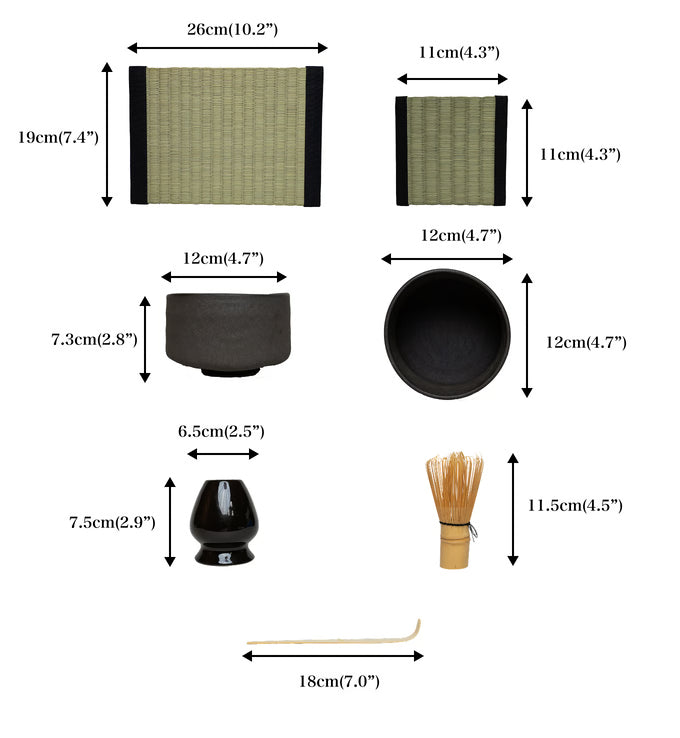
Materials and Features
Washi Tatami Mat
Materials
- It does not have the natural scent of traditional igusa tatami.
- Prolonged exposure to high temperatures or direct sunlight may cause the resin coating to deteriorate over time.
- The fibers are slightly firmer, so the surface feels less supple than natural igusa tatami.

Features
- Highly resistant to fading, with relatively strong UV resistance.
- Water- and stain-resistant, making it easy to clean and maintain.
- Excellent durability and abrasion resistance, ideal for use in restaurants, hotels, and other high-traffic environments around the world.
- Less prone to mold growth in humid conditions.
- Wide color variations allow for high design flexibility.
- Generally lighter in weight than natural igusa tatami.
Mino Ware (Porcelain)
Material: Porcelain
Porcelain is a type of ceramic made primarily from stone-based materials such as kaolin, feldspar, and silica, fired at high temperatures between 1,200°C and 1,400°C.
At these temperatures, part of the material vitrifies (turns glass-like), creating a dense, hard, white body with very low water absorption and a slightly translucent quality.
It can be formed thin, with a smooth surface and clear, bright whiteness, and is sometimes referred to as “stone ware” in Japanese terminology.
- Main raw materials: crushed stone such as pottery stone, feldspar, and silica.
- Water absorption: almost none – it does not absorb water.
- Strength: very hard and highly durable
- Heat conduction: conducts heat well, so it heats up and cools down relatively quickly
- Sound: when tapped, it produces a clear, metallic-like tone.
Features
Mino ware (Mino-yaki) is produced in the Tono region of Gifu Prefecture (including Tajimi, Toki, and Mizunami), Japan’s largest ceramics production area, with a history of over 1,300 years.
Unlike many other traditional wares, Mino ware does not have a single fixed “style.”
Throughout its long history, it has continuously absorbed diverse techniques and aesthetics, making it one of the most versatile and expressive types of Japanese ceramics.
How to Use
How to Use the Matcha Set
1. Add matcha powder
Put 1 teaspoon (about 1 g) of matcha into the bowl.
Adjust the amount to your taste.
2. Add a little hot water and mix
Pour a small amount of hot water into the bowl and mix to dissolve any lumps.
3. Add more hot water
Add more hot water until you reach your preferred strength.
(As a guide, about 60–80 ml in total.)
4. Whisk until frothy
Using the chasen (bamboo whisk) or a small frother, whisk quickly in an “M” motion.
When a light foam appears on the surface, it’s ready.
5. Enjoy
Sip directly from the bowl.
You can enjoy it plain, or add a little sweetness if you like.
Relax and enjoy matcha in your own style.
How to care
Care Instructions for Washi Tatami
- Does not have the natural scent of traditional igusa tatami.
- Prolonged exposure to high temperatures or direct sunlight may cause the resin coating to deteriorate.
- The fibers are slightly firmer, so it feels less flexible than natural igusa.
Care Instructions for Bamboo Whisk & Scoop
1. Do not leave them soaking in water
Bamboo absorbs water easily, which can cause mold, cracking, and warping.
Rinse gently after use and dry off the water right away.
2. Keep away from high heat and direct sunlight
If bamboo dries out too much, it can crack.
Avoid placing it in direct sunlight or near heaters and other heat sources.
3. Do not use a dishwasher or dryer
Dishwashers and dryers can damage bamboo quickly with heat and water pressure.
Always wash by hand and let it air-dry naturally.
4. Dry the whisk with the tips facing down
Let the chasen dry upside down, or use a whisk holder.
This keeps water from staying at the base and helps prevent mold.
“Tips down” means the thin bristles you whisk with should be pointing down.
5. Do not scrub the scoop
The chashaku only touches a little hot water or matcha powder.
Simply wipe it clean gently. Scrubbing can scratch and damage the surface.
6. Store in a well-ventilated place
If stored in a sealed, humid space, bamboo can easily grow mold.
When not using for a long time, keep it in a cloth bag in a cool, dry, well-ventilated place.
About Shipping
Processing and Delivery Time
Order processing time is 3-7 business days. Shipping time is 2-10 business days, but it may vary depending on the destination country.
Customs Duties, Taxes, and Other Fees
For international shipping, customs duties, import taxes, and other fees may apply. Please note that these costs are the responsibility of the customer.
Return and Refund Policy
While we take great care to ensure the quality of our products, if you receive a defective item or an incorrect item, please contact us at kawatajapan.store@gmail.com within 7 days of receiving your order. We will verify the situation and either send you a replacement or issue a refund.
Please note that, as a general rule, we do not accept returns due to customer reasons. We cannot accept returns or exchanges for items that have been used, damaged, or are simply not what you expected. Thank you for your understanding.
Contact Us
If you have any questions or concerns, please feel free to contact us at the following email address: kawatajapan.store@gmail.com